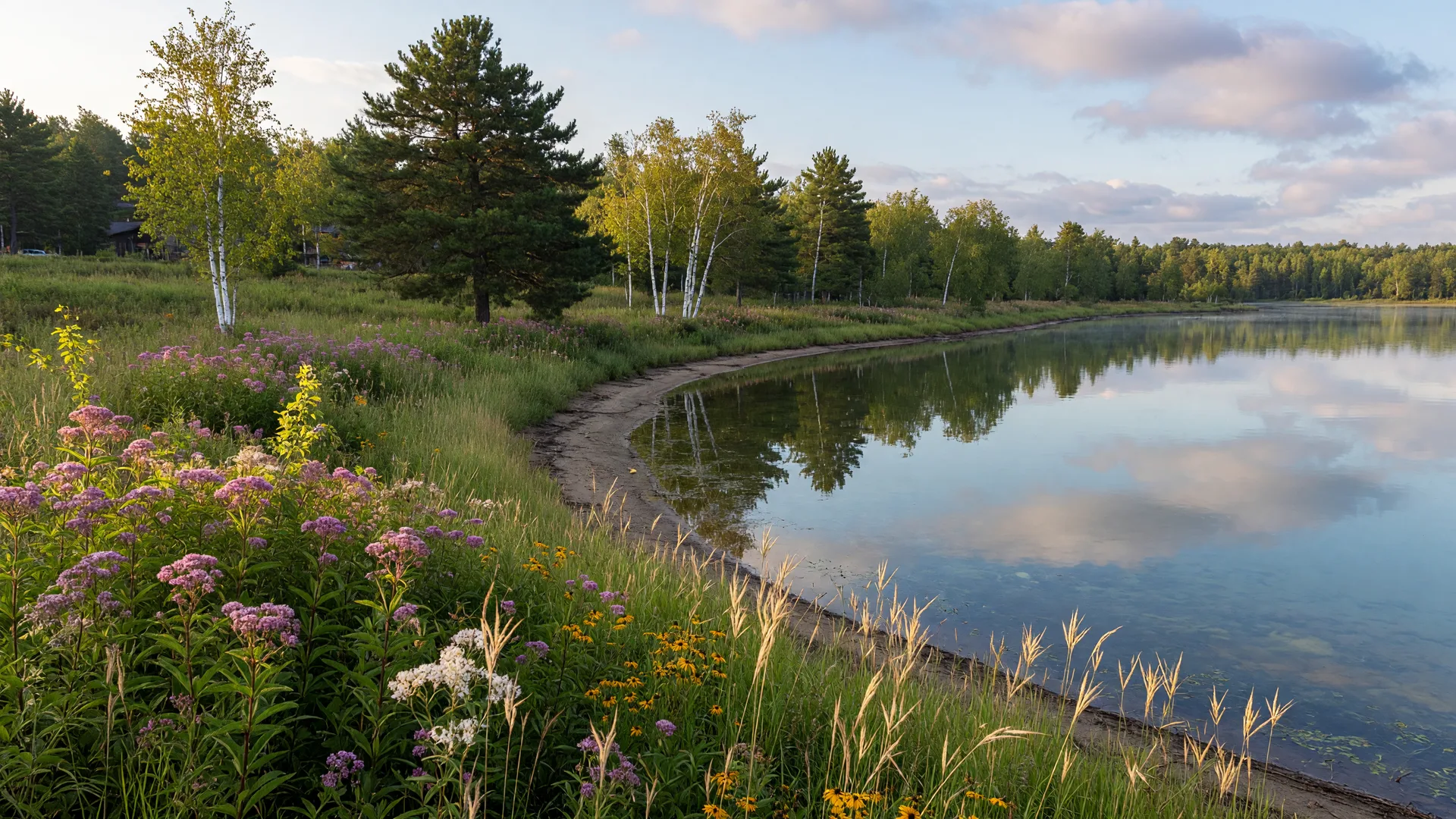
The Whitefish Chain is one of the most beloved lake systems in Minnesota, 14 interconnected lakes framing close to 115 miles of shoreline near Crosslake. But the same things that make it beautiful are also what make it fragile. Every septic system, every strip of mowed lawn, and every riprap wall along the shore has an effect on the water. As someone who has lived on these lakes my whole life, I want to share what lake home owners can do to keep the chain clean, clear, and healthy for the next generation.
Why the Water Quality of the Chain Matters
The Whitefish Chain is a big body of water, more than 14,000 acres across its 14 lakes. But a big system still responds to what happens at its edges. Every property drains toward the water, and whatever runs off the land ends up in the lake. That includes sediment from driveways and erosion, lawn chemicals, and nutrients from septic systems.
The organization that tracks this most closely is WAPOA, the Whitefish Area Property Owners Association. WAPOA has been testing the chain's water for years and has been candid that aging septic systems and shoreline development are putting real pressure on water quality, accelerating the natural aging of the lakes. Protecting the chain is not an abstract cause. It is what keeps the swimming water clear, the walleye biting, and the lake home values strong. It is also, for most owners, a matter of simple, doable maintenance.
Septic Systems: The Unseen Risk on Every Shore
Of all the ways a lake home can affect water quality, the septic system is the most important to get right. Under Minnesota's subsurface sewage treatment system (SSTS) rules and Crow Wing County's and Crosslake's shoreland ordinances, a septic system must be located well back from the shoreline and outside the ordinary high water mark, and it has to be designed, installed, and maintained to protect the lake.
Many cabins on the Whitefish Chain were built decades ago, when standards were looser. Older systems can be undersized for modern use, corroded, or positioned too close to the water. WAPOA has highlighted failing and aging septic systems as one of the biggest threats to the chain's water quality. The good news is that the fix is usually straightforward.
Have your system pumped and inspected on a regular schedule, generally every one to three years depending on use. Know where your system and its drain field are located, and never park vehicles, build, or run heavy equipment over the field. Watch for red flags: slow drains, soggy ground over the drain field, strong odors, or lush green grass in one spot when the lawn around it is dry. These can signal a system that needs attention. If you are buying an older lake home, a septic inspection and a review of the compliance paperwork should be near the top of your list before you close.
Let the Shoreline Grow: Native Buffers
One of the simplest and most effective things a lake home owner can do is to stop mowing the grass all the way down to the water and let a strip of native plants grow instead. A native shoreline buffer of wildflowers, grasses, shrubs, and young trees does a remarkable amount of work. Its roots hold soil in place and filter runoff before it reaches the lake. It slows erosion, provides food and cover for birds and pollinators, and shades the shallows where fish spawn.
WAPOA actively encourages this through its annual Shoreland Restoration Contest and its Shoreline Restoration Open House in Crosslake, run alongside Crow Wing Soil & Water and the National Loon Center. The contest celebrates owners who restore their shorelines to a natural state, and it is a great place to see real examples and get free guidance. A buffer does not have to mean giving up the lake view. A thoughtfully designed shoreline keeps a clear sight line to the water while turning the mowed edge into living habitat.
What About Seawalls and Riprap?
When waves start undercutting a shoreline, the instinct is often to armor it with a rock wall or riprap. But hard armoring has real costs. Solid rock seawalls can reflect wave energy, increase erosion on neighboring properties, and eliminate the shallow water habitat that fish and other wildlife depend on. They can also conflict with shoreland rules that favor a natural, vegetated shoreline.
Where erosion is a genuine problem, bioengineering approaches are usually better for the lake. Willow wattles, coil logs, native plantings, and gently sloped banks stabilized with vegetation can hold a shoreline in place while preserving fish and wildlife habitat. WAPOA and the local soil and water conservation district can point property owners toward these softer, lake-friendly solutions. The goal is not to fight the water but to work with it.
Keeping Phosphorus Off the Land
Phosphorus is the nutrient that drives algae growth in Minnesota lakes, and a surprising amount comes from everyday choices on land. WAPOA's water testing guidance is straightforward on this. Keep driveway sediment and runoff out of the water, avoid phosphorus-containing fertilizers near the lake, keep your septic system in good shape, and do not mow the lawn so far down that bare soil runs into the water.
These add up fast. Driveway gravel washed into the lake, a bag of phosphorus fertilizer spread near the shoreline, an overworked septic system, these are the small sources that slowly feed algae and murky water. Getting them under control is some of the cheapest insurance a lake home owner can buy, and it keeps the lake swimmable and clear for everyone on the chain.
What Buyers of a Lakefront Property Should Think About
For someone buying a lake home on the Whitefish Chain, shoreland stewardship is part of the deal. When you look at a property, ask questions about the septic system, its age, and its compliance paperwork. Look at the shoreline and the driveway and ask how runoff is handled. Notice whether the shore is a natural buffer or mowed to the edge, and whether it has been armored.
The property at 12388 Brookwood Circle is a good example of what to look for. It sits on the Whitefish Chain with a beautiful private sandy beach, exactly the kind of feature that makes a lake home special. When someone buys a place like this with the idea of renovating, the smart approach preserves that beach and the shoreline while modernizing the house. A beach is a form of natural shoreline worth protecting, and keeping it in good shape is part of being a good neighbor to the lake.
The chain has given the people around it generations of memories. Keeping the water clean is how we make sure those memories keep being made. It does not require heroic effort. Clean septic habits, a little shoreline left to grow, and a bit less phosphorus on the land, that is the whole recipe, and it is one every lake home owner can follow.
If you are considering a lake home on the Whitefish Chain, questions about septic, shoreline, and water quality are exactly the kind I help buyers work through. 12388 Brookwood Circle offers a beautiful beach and a prime spot to enjoy the chain for years to come. Contact Noah for a showing.
Contact Noah