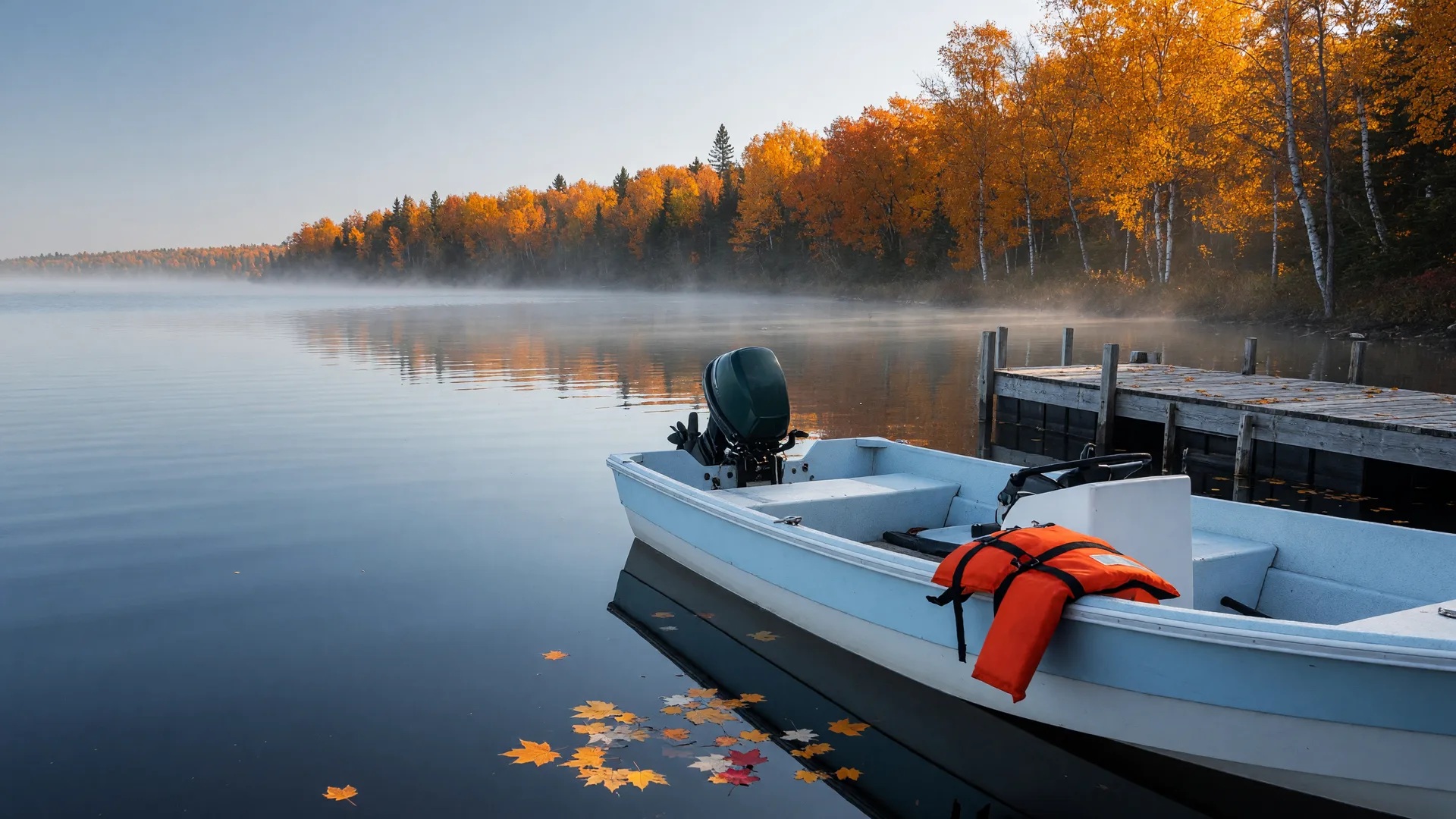
Fall is the most beautiful time to be on the Whitefish Chain near Crosslake, but it is also the time of year when the water turns dangerous fastest. Minnesota's DNR defines the cold-water period as any time the water drops below 70 degrees, and roughly 30 percent of fatal boating accidents in the state happen during that window, most of them involving people who were not wearing a life jacket. This guide covers what every lake home owner and visitor should know before taking the boat out for those last golden rides of the season.
Why the Whitefish Chain turns cold so quickly
The Whitefish Chain is a 14-lake system covering more than 14,000 acres of deep, clear water. That clarity is part of why the chain is so spectacular, but clear lakes lose heat faster than dark-stained ones, and the chain's depth means it warms slowly all summer and then gives that warmth up quickly once the nights turn cool. By late September and early October the surface temperature on most of the chain has already slipped below the 70-degree mark, and it keeps falling through the 50s and into the 40s as October winds down.
Fall turnover makes the change even more pronounced. As the surface cools, it sinks and mixes with the deeper water, breaking up the warm summer layers and pulling cold water from the depths up toward the surface. That is why a swim or an accidental dunk in October feels so shockingly different from the same water in July: the lake is not just cooler at the top, the whole water column is cold.
What actually happens if you go in
The DNR's cold-water guidance spells out a grim three-stage timeline. In the first two to three minutes, cold shock hits: the gasp reflex kicks in, breathing becomes rapid and uncontrollable, and water can be inhaled almost involuntarily. This is the stage where most drownings happen, and it strikes even strong swimmers. Around the 30-minute mark, swim failure sets in as muscles in the arms and legs cool, making it nearly impossible to keep your head above water regardless of ability. Beyond that, immersion hypothermia gradually takes hold.
The DNR teaches the 1-10-1 principle to frame the survival window: one minute to get your breathing under control, about 10 minutes of useful movement to climb out or reach help, and roughly one hour before hypothermia overcomes you. A life jacket is the difference between having those 10 minutes of movement and being helpless within the first few minutes. You cannot swim yourself warm, and swimming actually accelerates heat loss.
The life jacket rules, and the smarter choices
Minnesota law requires one U.S. Coast Guard-approved, properly sized, readily accessible life jacket for every person on board a boat, and children under 10 must actually wear a properly fitted jacket whenever the boat is underway. On the fall Whitefish Chain, though, the smart approach goes beyond the letter of the law: everyone should wear a jacket, not just carry one. Most of the state's cold-water fatalities involved people who had jackets aboard but were not wearing them, because the seconds of cold-shock panic leave no time to grab one from a storage compartment.
In cold water, the DNR recommends a traditional foam-filled jacket over an inflatable. Inflatables are comfortable and popular, but cold temperatures can prevent the gas cylinder from fully inflating, and a partially inflated jacket is worse than none at all. Foam jackets also float a person on their back, which keeps the airway clear even when cold shock makes it impossible to stay oriented. Check the fit on kids every season, too, because fall gear layers change how jackets sit.
Late-season boating around Crosslake: practical tips
Fewer boats on the water is one of fall's great pleasures, but it also means help is farther away. A breakdown or a fall overboard in October may sit unnoticed for much longer than it would in July, so plan like no one is watching: file a float plan with someone on shore, carry your phone in a waterproof case, and head out only when the wind forecast is calm. The chain's narrow connecting channels, where currents and springs move water between lakes, deserve extra care, and so do the hours around dusk, when water temperatures feel their coldest and visibility drops.
Fall is also the season when boat-up dining shines along the chain, with lakeside spots like Moonlite Bay still welcoming boats through the shoulder months. If you are tying up for lunch, make sure someone stays aware of your boat and your plans, and remember that the restaurant dock is not a place to linger once the wind picks up. Keep the radio on and the bilge pump working, and give the boat a full going-over on the trailer before the last trips, because a dead battery or a fouled plug is a much bigger problem in October than in July.
When the season officially ends
The lake season on the Whitefish Chain ends with the docks: Crow Wing County rules require markers and buoys to be removed or fully submerged by November 1, and in practice most docks and lifts come out well before freeze-up, both to avoid ice damage and to keep the shoreline clear. Once the docks are out and the boats are winterized, the safety conversation shifts to the ice, and the chain's cold-water lessons carry straight over: ice is never guaranteed, and the same deep lakes that warm slowly also freeze slowly. Pulling the dock is the official end of the boating year, and it is the right moment to celebrate the season you had rather than push the water.
A few simple habits make every fall boating day better: wear a foam life jacket, check the forecast twice, keep a phone within reach, and let someone know where you are headed. The Whitefish Chain in October is one of the most beautiful places in Minnesota, and with the right respect for the cold, it is also a safe one.
If you are thinking about making the Whitefish Chain your year-round home, 12388 Brookwood Circle sits right on the water with a beautiful private beach, a dock and lift, and calm-water access that is a joy in every season, including the crisp, quiet days of fall. It is the kind of property that makes you want to squeeze every last weekend out of the season.
Ready to find your place on the water? Noah Goedker is a lifelong Lakes Area resident and knows the Whitefish Chain as well as anyone. He would be glad to show you what lake living really looks like, in every season.
Contact Noah