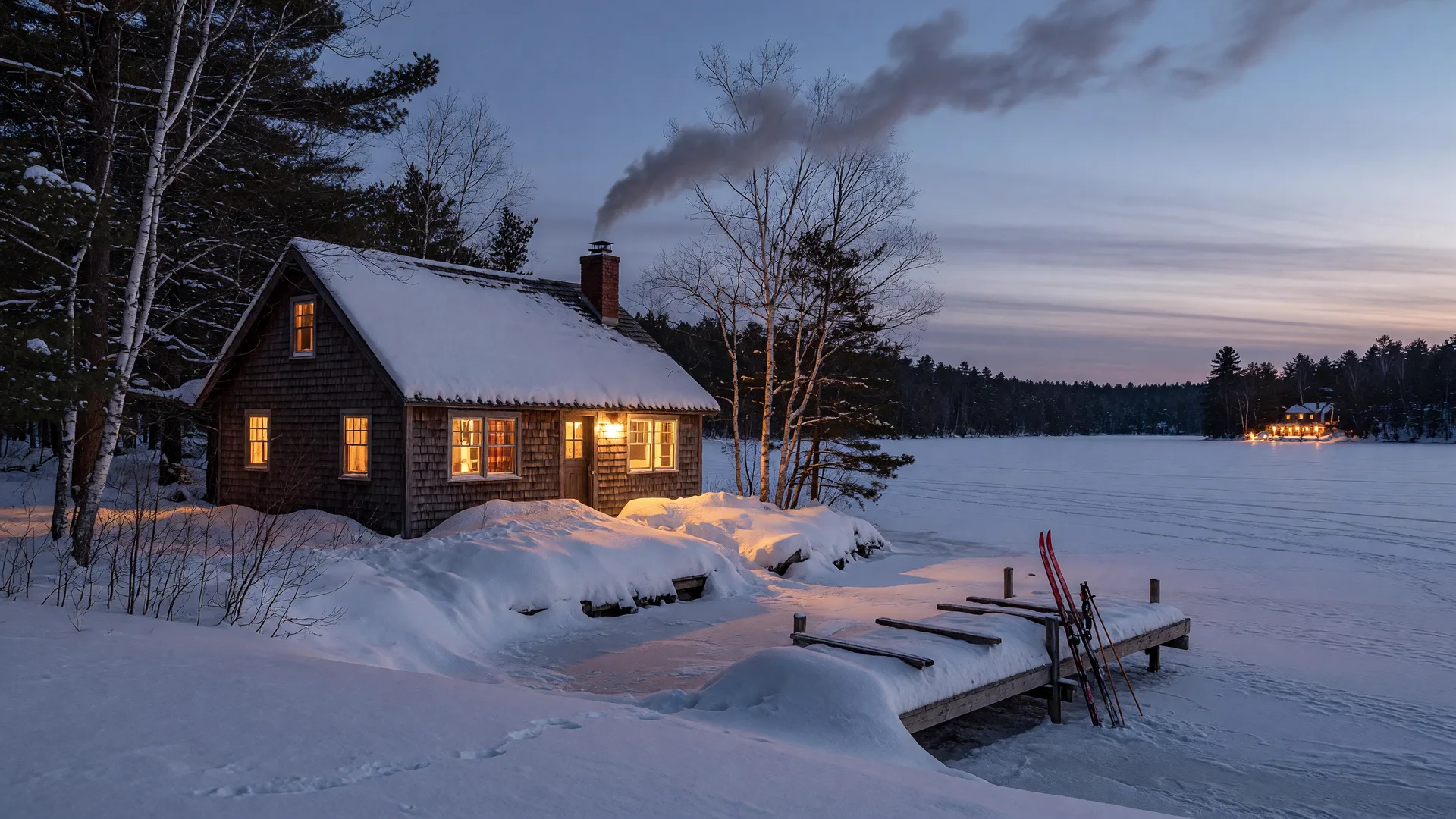
If you closed on a Whitefish Chain lake home this fall, your first winter is coming at you fast, and that is a good thing. Winter is when 12388 Brookwood Circle and the other homes on this chain become something most people only dream about: a warm cabin on a frozen lake, snowmobiles crossing the bay, and a community that celebrates the cold instead of hiding from it. This guide walks through what to expect in your first winter near Crosslake, from heat and propane to snow removal, ice safety, and the winter events that make the chain special.
What a Whitefish Chain winter actually feels like
Crosslake averages about 41 inches of snow a year, with the snowy season typically running from late November into early March. December's average high lands around 23 degrees, January is the coldest month with average highs near 19 and overnight lows around 2 degrees below zero, and the lakes lock up with ice that lasts well into spring. The numbers sound forbidding to someone from the cities, but locals will tell you the secret: the sun is bright, the snow is light and powdery, and winter here is far more enjoyable than the thermometer suggests.
The days are short, so plan your outside work and your recreation around the light. What you trade in daylight you get back in peace: the chain is quiet, the roads are empty, and the lake views from a warm window with snow falling are the reason many people buy up here in the first place.
Heat, propane, and knowing your fuel
Most lake homes on the chain heat with propane, electric, or a mix of both, often with a wood stove or fireplace in the middle of it all. If your new home runs on propane, the single most important habit of your first winter is simple: do not let the tank run low. Sign up for automatic delivery so the supplier watches the gauge for you, and consider a pre-buy or budget program to lock in winter pricing. Suppliers serving the Crosslake area include Beaudry Oil & Propane, AmeriGas, and Lakes Gas in nearby Jenkins, and every one of them will tell you the same thing: fill before freeze-up, not during an arctic blast.
Electric heat works fine but gets expensive in January, so check your thermostat habits early and set a schedule you can live with. If the home came with a wood stove or fireplace, get the chimney inspected and cleaned before the first fire. And if budget is a concern, know that Minnesota's Energy Assistance Program, run through the state Department of Commerce, can help with winter heating bills for qualifying households, with applications open from October through May. For Crow Wing County, Tri-County Community Action Partnership administers the program locally.
Snow removal: who plows what
Before the first big snow, it pays to know exactly who clears what. Crow Wing County plows the county and state-aid routes, more than 600 lane miles served by a fleet of plows you can track in near-real time on the county's online snowplow map. Township roads around Crosslake are maintained by their own townships, not the county, and city streets in Crosslake are handled by city public works. Your driveway, however, is yours: private roads and driveways are the homeowner's or homeowners' association's responsibility, so line up a plow contractor or an HOA plow agreement before the first storm of the season.
A plow contract is worth every dollar for a weekend lake home, because a plowed drive saves you from digging out after a week away. Ask neighbors in your area who they use; word of mouth is how the good contractors fill their routes. Also plan for the practical details: mark your driveway edges with tall stakes before the snow flies, and make sure the contractor knows where the mailbox and any propane tank sit so nothing gets clipped.
Water and winter access
If your first winter involves a seasonal home, the water system should already be winterized, or you will have a plumber out before the first hard freeze. For year-round living, the opposite challenge applies: keep things flowing. Heat tape on exposed pipes, a warm cabinet under the kitchen sink, and a draft-free crawl space matter a lot in January. Check on the home after every cold snap, even if you are not staying in it, because a weekend lake home with a frozen pipe is how a small problem becomes a spring project.
Getting to the lake is different in winter, and that is part of the fun. When the chain freezes solid, you can walk, ski, and snowmobile right off your shoreline. Follow the DNR's ice thickness guidelines and remember that no ice is ever 100 percent safe: roughly 4 inches is the minimum for walking and ice fishing, 5 to 7 inches supports a snowmobile, and vehicles need considerably more, and you should double the guideline for snow-covered or white ice. The Whitefish Chain has springs and narrow channels where moving water keeps ice thinner and less predictable, so check ice conditions as you go and ask neighbors where the reliable crossings are on your lake.
The lakes in winter: fish, trails, and festivals
Winter on the Whitefish Chain is a season, not an off-season. Ice fishing turns the bay into a village of houses and tip-ups, with walleye, northern pike, and panfish active through the ice and lake trout a draw on Big Trout Lake. The Paul Bunyan State Trail, which passes right through Crosslake, is groomed for snowmobiles and cross-country skiers and connects to the wider Crow Wing County snowmobile network of nearly 1,000 groomed miles.
The community gathers all winter, too. Crosslake WinterFest returns February 4-6, 2027, for its 25th year with pond hockey, sledding, bonfires, trivia nights, bingo, the Lost Medallion treasure hunt, and the famous SoupFest. The National Loon Center stays busy, the library runs programs through the season, and the bars and restaurants in Crosslake, Pequot Lakes, and Nisswa fill up with neighbors after dark. It is everything people move up here for, and your first winter is the best one to jump in and meet everyone.
Your first winter checklist
In short: sign up for automatic propane delivery and schedule a chimney cleaning, lock in a plow for the driveway, mark the driveway edges, check the water system or keep it flowing, review the DNR ice guidelines before the first walk on the lake, and put WinterFest on the calendar. Do those six things and your first winter on the Whitefish Chain will be less about survival and more about the part everyone actually loves: coffee by the fire while the snow piles up, and the whole frozen chain as your backyard.
12388 Brookwood Circle sits right on the Whitefish Chain with a private beach and a year-round shoreline that shines in every season. If you are dreaming of a lake home where the winter view from the windows is as good as the summer one, it is a property worth a look before the snow flies.
Noah Goedker is a third-generation Lakes Area real estate agent who has spent his life on and around the Whitefish Chain, and he would be glad to help you find a lake home built for every season. Whether you are buying before the holidays or planning a spring move, he knows which properties winter well and which ones need work.
Contact Noah