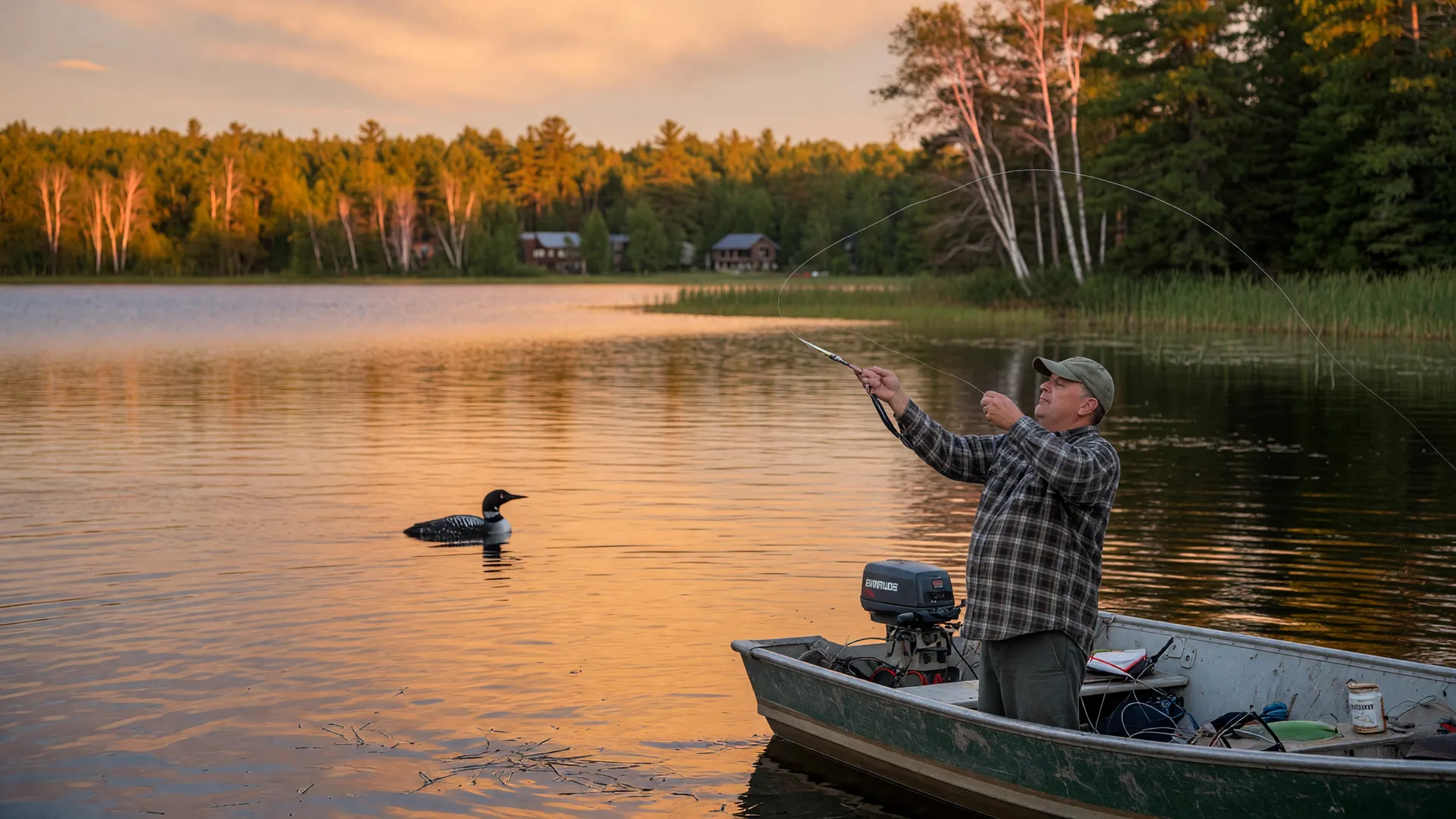
The Whitefish Chain of Lakes is one of the premier fishing destinations in Minnesota. Fourteen interconnected lakes spread across more than 14,000 acres, and the fishing here is as good as it gets in the Brainerd Lakes area. The Minnesota Department of Natural Resources uses the chain as a primary walleye egg-take site, stocking roughly 5 million walleye fry into the system each year, and the water quality ranks among the best in the region. For anyone who owns a lake home on the chain or is thinking about buying one, the fishing alone is reason enough to be here.
Late summer and early fall is a special time on the Whitefish Chain. The water has warmed through the long days of July, the fish have settled into predictable patterns, and the crowds that pack the lakes on the Fourth of July have thinned. The evenings are long and golden. The walleye bite picks up as the sun drops toward the treeline. If you have a boat on the chain, late August through October is some of the best fishing of the year.
The Fish That Call the Chain Home
The Whitefish Chain supports a broader range of species than most Minnesota lake systems. The warmwater and coolwater fisheries overlap here, giving anglers access to walleye, northern pike, largemouth and smallmouth bass, black crappie, bluegill, yellow perch, and lake whitefish. Big Trout Lake and Upper Whitefish Lake both hold lake trout, a species that is uncommon in central Minnesota and draws serious anglers from across the state.
The chain's walleye population is well above the state average, according to DNR surveys. That is not an accident. The deep basins, abundant forage, and clean water of the Whitefish chain create ideal conditions for walleye reproduction and growth. The DNR's egg-take operations here supply walleye fry for lakes across Minnesota, and the fish you pull out of the chain are every bit as healthy as their reputation suggests.
Late Summer Patterns: Where the Fish Are in August and September
By late August, the Whitefish Chain's fish have settled into their warm-weather patterns. The water column has stratified, the weedlines have reached their summer density, and the fish know exactly where to find their preferred temperature and forage. Understanding these patterns is the key to consistent success on the chain.
Walleye
Walleye are the main event on the Whitefish Chain, and late summer is a productive time to target them. By late August, walleye have moved to deeper structure during the day, typically holding in 15 to 28 feet of water along deep weedlines, mid-lake humps, and the edges of sunken islands. Upper and Lower Whitefish Lakes are the primary walleye fisheries on the chain, with their expansive deep basins and abundant structure. On Bertha Lake, the prominent point on the south end is a productive walleye spot in 15 to 20 feet of water, with the fish moving shallower in the evening.
During low-light periods, walleye scatter across a wide depth range, from 8 to 25 feet, and become more accessible to anglers fishing from the shoreline or shallow structure. Live bait rigs with minnows or nightcrawlers are the go-to presentation, but jigs tipped with a leech or plastic are equally effective and let you cover water more efficiently. The chain has clear water with an established weed line at approximately 18 feet, so adjust your presentation accordingly: natural colors in clear water, brighter profiles when the wind kicks up some stain.
Northern Pike
Northern pike are abundant throughout the Whitefish Chain, and late summer keeps them active along the deep weed edges of the larger lakes. Upper Whitefish, Lower Whitefish, Edwards, North Long, and Pelican Lakes all hold healthy pike populations. Sucker minnows suspended below a bobber or fished on a quick-strike rig along the weedline are the standard approach. For a more active presentation, large spinnerbaits and jerkbaits retrieved over the tops of submerged weed beds will draw reaction strikes from territorial pike.
Bass: Largemouth and Smallmouth
Both largemouth and smallmouth bass are well established on the Whitefish Chain. Smallmouth action is particularly good around rocky points, island shorelines, and the deeper, clearer lakes like Upper Whitefish and Big Trout. Largemouth prefer the weedy bays and quieter areas of Cross Lake, Lower Hay, and Clamshell. In late summer, look for bass holding tight to docks, weed beds, and submerged structure in the 8 to 15 foot range. Jigs with a perch-colored trailer, drop-shot rigs with a finesse worm, and topwater frogs over the weed mats all produce consistently.
The smallmouth fishing on Big Trout Lake is worth a special mention. The lake's clean, deep water and abundant rock structure create ideal smallmouth habitat. A tube jig or ned rig worked along the rocky banks in 10 to 20 feet will put you on fish. The smallmouth here pull hard and fight dirty. They are one of the chain's best-kept secrets.
Panfish: Crappie and Bluegill
For anglers who want to keep things simple or bring kids along, the panfish action on the Whitefish Chain is excellent. Crappies and bluegills move to shallow bays and back bays in late summer, where they relate to vegetation and available forage. On calm, sunny days, they can be found in as little as 2 feet of water, especially on Moonlight Bay on Cross Lake. When conditions turn cooler or overcast, they move slightly deeper but stay near cover.
A small jig tipped with a wax worm or a tiny piece of nightcrawler under a bobber is all you need. The chain is full of panfish, and they are usually eager to bite. For lake home owners on the Whitefish Chain, having a dock that reaches deeper water means you can often catch crappie and bluegill without even launching the boat.
Lake Trout on Big Trout and Upper Whitefish
Big Trout Lake and Upper Whitefish Lake are two of the few places in central Minnesota where you can target lake trout. These deep, cold lakes hold the oxygen and temperature profile that lake trout need through the summer. On Big Trout, target the edges of the 100-foot depth zone and work the points and humps on the lake's east end. On Upper Whitefish, the deep basins near the center of the lake hold trout through the warm months.
Lake trout fishing requires specialized gear. Downriggers or lead core line are the standard tools for getting your presentation down to the 50 to 90 foot range where the trout hold during summer. Spoons and live bait rigs both produce. The lake trout on the Whitefish Chain are not as abundant as the walleye, but they grow large, and landing one is a memorable experience.
Best Fishing Spots on the Chain
With 14 interconnected lakes, you could spend a lifetime exploring the Whitefish Chain and never fish the same spot twice. But if you are looking for a starting point, here are the most productive locations on the system:
- Upper and Lower Whitefish Lakes -- The largest lakes on the chain and the primary walleye fisheries. Deep weedlines, mid-lake humps, sunken islands, channels, and points. Start here and work the structure.
- Big Trout Lake -- The lake trout capital of the chain. Also excellent for smallmouth bass. Target the east end humps and the deep 100-foot basins.
- Bertha Lake -- The south end point in 15 to 20 feet is a consistent walleye producer, especially in the evening.
- Moonlight Bay on Cross Lake -- The best starting spot for panfish. Bluegills and crappies in as little as 2 feet of water on calm, sunny days.
- Deep weedlines on Lower Hay, Clamshell, and North Long Lakes -- These lakes hold good populations of walleye and northern pike with less boat traffic than the main lakes.
Fall Fishing: What Changes After Labor Day
As September progresses and the water begins to cool, the fishing on the Whitefish Chain shifts into a new gear. The walleye transition from their summer deep-water holding areas to shallower feeding zones, following the forage that moves up as the water temperature drops. The weedlines break down, opening up access to areas that were choked with vegetation in July and August. The northern pike feed aggressively through September and into October, putting on weight for the winter ahead.
Fall on the Whitefish Chain also means fewer boats on the water. Weekdays in September and October are quiet. You can have an entire bay to yourself. The fall colors along the shoreline add a backdrop that makes every outing feel special. For lake home owners on the chain, this is the season that keeps you coming back year after year.
Practical Tips for Fishing the Whitefish Chain
A few things worth knowing before you drop a line on the Whitefish Chain:
- A Minnesota fishing license is required. Residents and non-residents alike need a valid license. Licenses are available online through the DNR or at bait shops and sporting goods stores in Crosslake and the surrounding area.
- Know the invasive species regulations. Zebra mussels have been detected in the Whitefish Chain. Clean, drain, and dry your boat and equipment between launches. It is the law, and it is the right thing to do for the health of the chain.
- Public boat access is available on several lakes. The main launches are on Cross Lake, Lower Hay Lake, Clamshell Lake, and Big Trout Lake. If you own a home on the chain with a private dock, you already have the best access of all.
- Consider hiring a guide for your first trip. Local guides who know the Whitefish Chain intimately can save you days of trial and error. They know the structure, the hot spots, and which lakes are producing on any given day. The Nisswa Guides League is a good place to find experienced, reputable guides who work the chain regularly.
- Respect the no-wake zones. Several channels and narrow passages require slow, no-wake speeds. This protects the shoreline, the wildlife, and other boaters. The channel between Upper and Lower Whitefish and the passage near the Crosslake Dam are the key areas to watch.
Why the Chain Stays Special
The Whitefish Chain is not just a good fishery. It is a special one. The water quality is exceptional, with phosphorus levels roughly half of the state standard. The Minnesota DNR has identified ten sensitive shoreline areas that support the greatest diversity of aquatic plants and wildlife. The chain supports 55 identified species of aquatic plants. The Whitefish Area Property Owners Association works actively on conservation and water quality monitoring, and their efforts help keep the chain healthy for future generations.
For lake home owners on the Whitefish Chain, having a dock in the water and a boat tied up means you can fish whenever the mood strikes. Evening walleye sessions after work. Early morning bass trips before the summer sun gets high. A quick perch fry for dinner from a bluegill bed you know by heart. That is the kind of life the Whitefish Chain offers, and late summer is one of the best times to live it.
12388 Brookwood Circle sits on the Whitefish Chain with direct lake access and a beautiful beach. Whether you are looking for a year-round lake home or a seasonal getaway that puts you on the chain's best fishing, Noah Goedker knows the Crosslake market and can help you find the right property.
Contact Noah