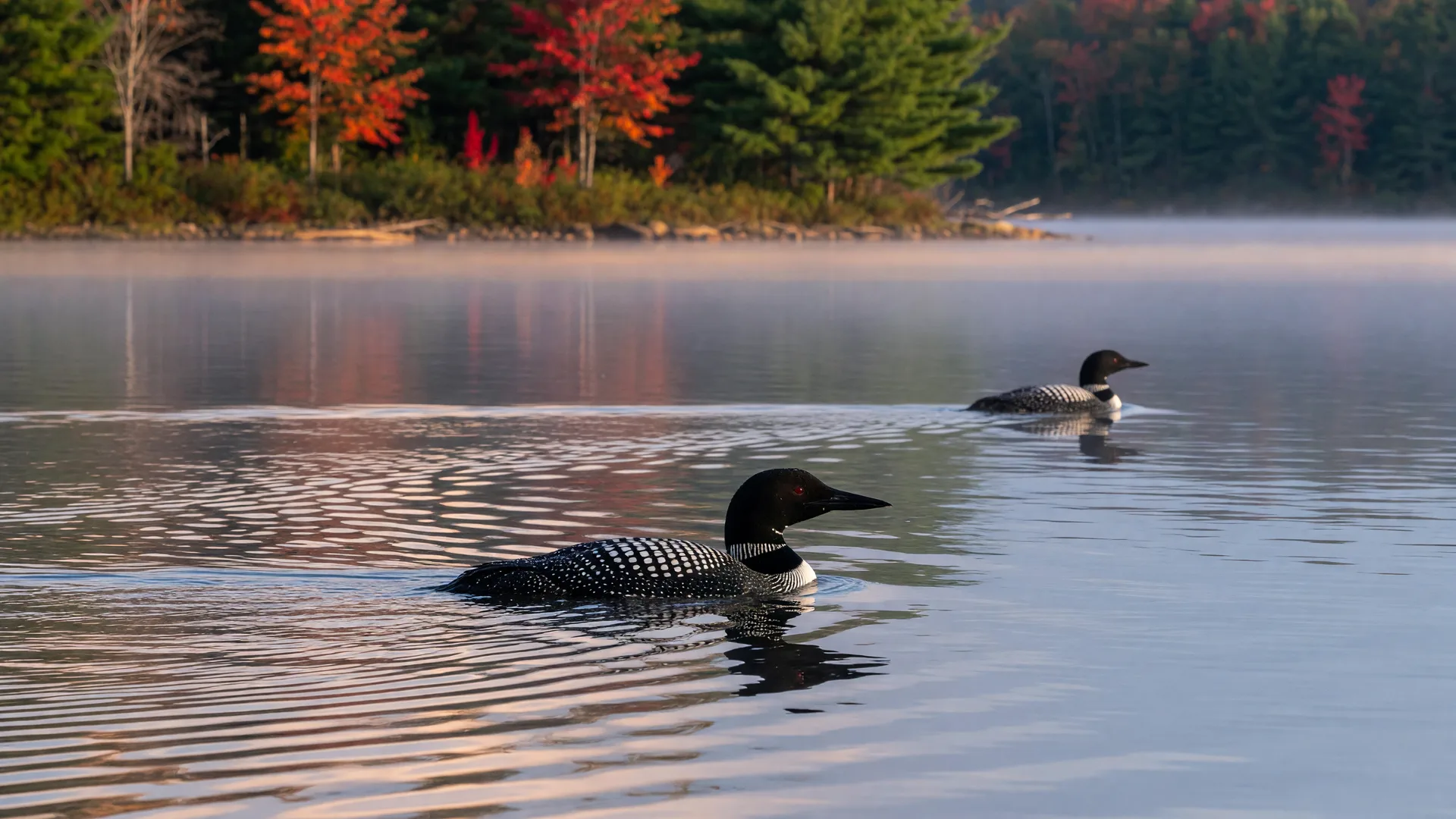
Fall on the Whitefish Chain is not just about the colors. In early September, the wildlife show is every bit as dramatic as the maples turning red. Loons gather on the open water before they migrate south, bald eagles work the shoreline looking for an easy meal, and white-tailed deer slip through the forest edges as the undergrowth thins. For anyone who owns a lake home near Crosslake, or is thinking about buying one, this is one of the most rewarding times of year to sit outside and just watch the chain wake up.
Why early fall is the best time to watch loons
The common loon is Minnesota's state bird, and the Whitefish Chain is one of the best places in the state to see it. Crosslake is home to the National Loon Center, which researches and protects loons across the chain. Through the summer you hear their haunting calls echoing across the water at dusk. But in late August and September something special happens: loons on the chain begin to gather in rafts, loose flocks of many birds, out on the open water before they start their fall migration.
Biologists say loons stage on big open lakes in the fall so they can feed intensively before the long flight south. On the Whitefish Chain they gather on Lower and Upper Whitefish Lake, where they feed on cisco, a small high-energy forage fish that is rich in the oil they need for the journey. Watching a raft of loons work the water on a calm September morning is a quiet, almost meditative sight, and it is one of the best free shows the chain offers.
Bald eagles patrol the shoreline in fall
The Whitefish Chain holds a healthy population of bald eagles, and early fall is a good time to spot them. As the leaves thin and the light turns golden, eagles perch in tall shoreline pines where they can watch the water, then drop down to hunt near shore. One of the most reliable places to look is around the Big Island area of the Rollie Johnson Natural & Recreational Area, a protected stretch of the chain where the trees and shoreline stay wild. Bring binoculars and scan the snags and high branches along the water, especially in the first and last hours of daylight.
Deer, otters, and the quiet edges of the woods
As the underbrush starts to die back in early fall, the forest becomes easier to see into, and that means white-tailed deer are more visible along the edges of trails and drives. The Crosslake Nature Trail, a quiet wooded walk near town, is a good place to look for deer at dawn and dusk, along with chipmunks, songbirds, wood ducks, and great blue herons working the shallows.
If you are lucky, you might spot a river otter in one of the chain's quieter inlets. Otters are playful swimmers that travel the shallow channels between lakes, and a morning paddle or a slow boat ride through a calm bay is often the best way to catch one slipping through the reeds. They are more often heard than seen, a splash, then a dark head disappearing, but catching a family of otters at play is a memory that stays with you.
Fall migration fills the sky
September and October are prime time for bird migration on the Whitefish Chain. Hawks and other raptors ride the thermals as they head south, while waterfowl pause on the chain's big lakes to rest and feed. Ducks and geese raft up on the open water, especially near the dam and in the wider basins of Upper and Lower Whitefish. A pair of binoculars and a quiet spot on the dock turns an ordinary coffee break into a front-row seat for the great autumn passage.
How to watch wildlife like a local
The best wildlife viewing on the whitefish Chain starts early and stays quiet. Loons and eagles are most active around dawn and again near sunset, so plan your coffee or your evening boat ride around those windows. Move slowly, cut your engine well out from shore, and let the wildlife come to you rather than chase it. Keep your distance, especially from nesting and rafting loons; a pair of binoculars or a spotting scope gets you much closer than noise ever will.
If you want a guided, working look at the chain's wildlife, the National Loon Center runs loon research tours aboard The StewardShip, its educational pontoon, on Thursday mornings through September. The crew surveys loon territories across the chain, and in early fall they visit Lower and Upper Whitefish Lake to observe the rafting loons before migration. It is a rare chance to ride along on real research and learn the chain's wildlife from the people who study it.
Wildlife is part of what makes lake living special
For lake home owners, the animals are not a side attraction, they are part of the daily rhythm. The loon call you hear from the deck, the eagle that wheels overhead while you load the boat, the deer that picks its way down the driveway at dusk, these are the moments that turn a house on the water into a place that feels alive. When buyers ask me what it is really like to live on the chain, wildlife is always part of the answer.
Fall is a wonderful time to see a property, because the wildlife, the light, and the quiet give you the full character of lake living. 12388 Brookwood Circle sits right on the Whitefish Chain with a beautiful private beach, a place where you can stand on the shore in early September and watch loons raft up on the open water. If you have ever wanted to know what that feels like, come see it for yourself.
12388 Brookwood Circle is a lakefront property on the Whitefish Chain with a beautiful sandy beach and a front-row seat to the area's wildlife. Fall is the perfect time to see what lake living on the chain is really about. Contact Noah for a showing.
Contact Noah